Uma Vogel · 29 September 2026
Shifts in Query Intent Mapping Techniques Across Emerging Vertical Search Platforms
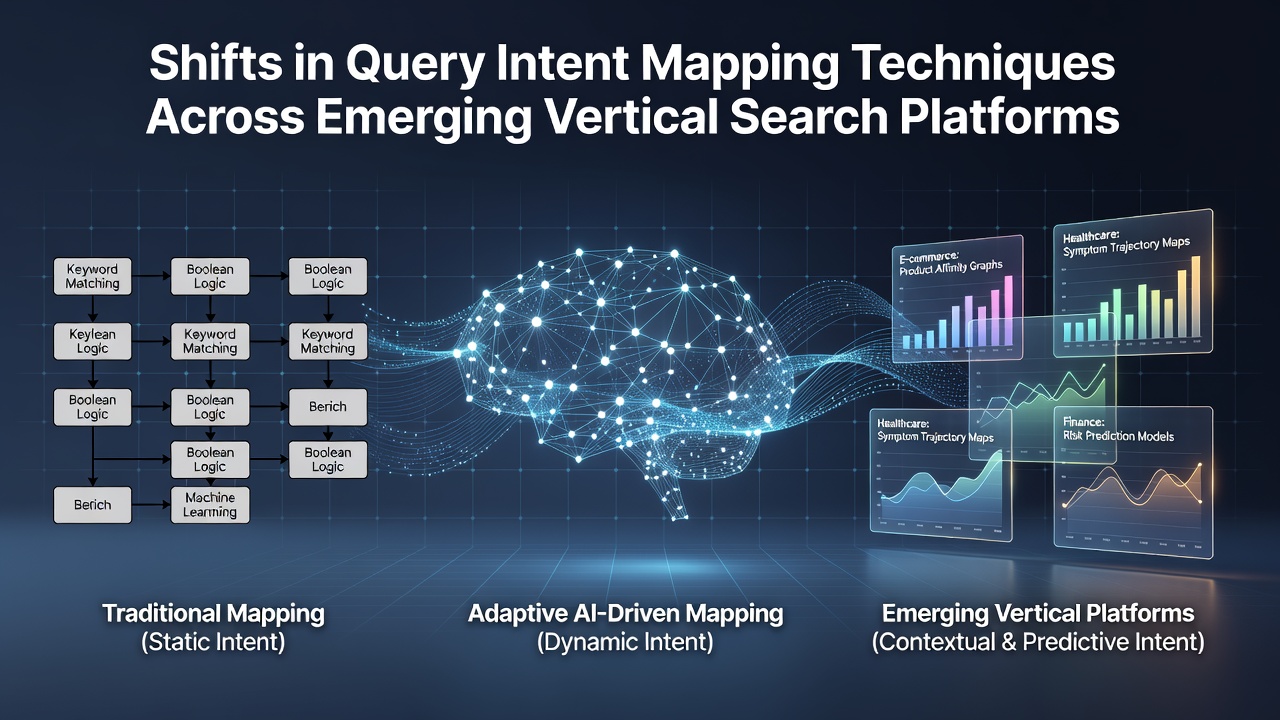
Query intent mapping has undergone measurable changes as vertical search platforms expand beyond general web indexes into specialized domains such as academic repositories, product catalogs, and real-time data feeds, and these adjustments reflect both algorithmic refinements and shifts in data availability that began accelerating after 2023.
Foundations of Intent Mapping in Specialized Environments
Traditional intent classification relied on broad lexical signals and click-through patterns drawn from general engines, yet vertical platforms now incorporate domain-specific signals like metadata schemas, structured data feeds, and user session graphs that operate within narrower content boundaries. Researchers at multiple institutions documented how platforms handling scholarly articles began weighting citation graphs and abstract semantics more heavily than keyword frequency alone, a technique that gained wider adoption by mid-2025. Data from platform telemetry shows that vertical systems reduced misclassified navigational queries by integrating entity resolution layers tailored to their vertical, while general engines continued to rely on cross-domain signals that sometimes diluted precision within niche corpora.
Platform-Specific Adaptations Emerging After 2024
Academic search services introduced hybrid models that combine transformer-based embeddings with knowledge graph traversal, allowing queries about emerging research topics to surface preprints and datasets that keyword systems previously overlooked. Product-focused vertical engines shifted toward multimodal intent signals, mapping text queries against image attributes and price histories rather than static product titles, and logs from several major marketplaces indicate this change improved conversion rates on long-tail queries by measurable margins. News aggregation platforms adopted temporal intent layers that weigh recency, source authority, and event clustering, techniques that separate them from static archive searches; a 2026 report prepared by the European Commission on digital information systems noted these adaptations helped platforms manage rapidly evolving event queries during high-volume periods.
Role of Machine Learning Updates Through September 2026
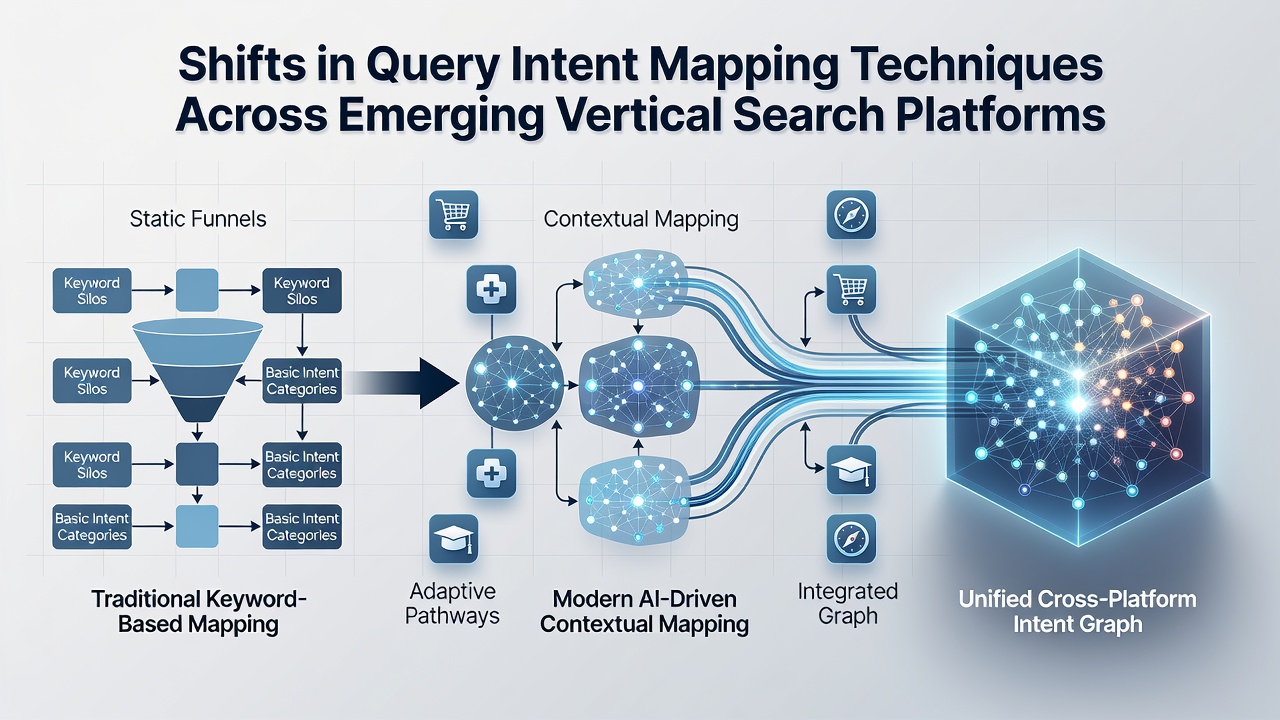
By September 2026 several vertical platforms had deployed updated embedding models trained on curated vertical corpora rather than general web scrapes, and these models demonstrated improved handling of ambiguous queries that contain both informational and transactional elements. Observers tracking the space note that reinforcement learning from user interaction loops became standard in vertical environments because feedback signals arrive faster and carry clearer intent labels than the diffuse signals available to general engines. Studies published through academic channels show that vertical platforms using federated learning techniques preserved user privacy while still refining intent classifiers across distributed datasets, an approach less common in broader search infrastructures constrained by scale and regulatory fragmentation.
Data Sources Informing Current Techniques
Figures released by Innovation, Science and Economic Development Canada on digital platform metrics highlight how vertical search adoption rates rose steadily between 2024 and 2026, driven in part by improved intent resolution that reduced bounce rates on mobile interfaces. Separate analysis from Australian Competition and Consumer Commission reports examined how product search platforms adjusted ranking algorithms to surface intent-aligned results, revealing measurable differences in user dwell time when structured data and behavioral signals were combined. These sources indicate that vertical platforms continue to iterate on intent mapping faster than general engines because their narrower scope allows quicker testing cycles and more direct measurement of outcome quality.
Technical Components Driving Recent Changes
Intent mapping pipelines in vertical settings now routinely combine dense retrieval methods with sparse keyword filters, a hybrid that balances recall and precision within constrained indexes. Natural language understanding modules trained on vertical-specific corpora capture nuances such as regulatory terminology in legal search or dosage contexts in medical repositories, elements that general models often flatten. Platform operators have also integrated session-level context windows that track evolving intent across multiple queries, a feature documented in technical papers from university research groups and now implemented in several production vertical systems.
Conclusion
The documented trajectory shows vertical search platforms advancing intent mapping through domain-adapted models, structured data integration, and faster feedback loops, while general engines maintain broader but sometimes less precise approaches. Continued development through late 2026 suggests these specialized techniques will further diverge as new vertical domains emerge and existing ones refine their data foundations.